
A fresh coat of paint is one of the fastest ways to lift a room. But not every home needs a full repaint. Often it is just the hallway that cops scuffs from school bags, the doors that have handprints and dings, the skirting that has been nicked by the vacuum, or the patched wall where an old TV bracket used to be. Painting touch-ups target those spots without the cost and disruption of painting the whole house.
We do painting touch-ups and small painting jobs in homes, rentals and small businesses across Cranbourne and nearby suburbs.
Painting jobs we do
- Touching up scuffs, marks and patched areas on walls
- Painting individual walls, including feature walls
- Painting doors and door frames
- Painting skirting boards and architraves
- Painting small rooms such as toilets, laundries and studies
- Painting ceilings in small areas after patching
- Painting after plaster repairs, TV removals or picture rearrangements
- Painting garden walls, fences and small exterior areas
- Painting before sale or end of lease
When touch-ups work and when they do not
Touch-ups are best for small areas on walls that are in reasonably good condition. They blend well when:
- The original paint colour and product are known
- The paint has not faded much
- The sheen level is low, such as matt or low sheen
- The area to be touched up is small
Touch-ups can stand out when:
- The original paint has faded or yellowed with age and sunlight
- The finish is semi-gloss or gloss, which shows differences in sheen
- The colour is a strong or dark tone
- Large areas are patched
In those cases, painting the whole wall, from corner to corner, gives a much better result than spot painting. We will tell you honestly which approach is likely to look best.
Finding your paint colour
Newer homes in Cranbourne East, Clyde North and Cranbourne West often come with a paint schedule from the builder listing colours and products. Check your handover documents, the garage or the meter box for leftover tins. If you cannot find the colour, a paint store can colour-match from a small chip. We can take a sample from a discreet spot if needed.
Preparation is most of the job
Good painting is mostly preparation:
1. Clean. Walls and trims are cleaned to remove grease and dust so paint bonds.
2. Repair. Holes and dents are filled, cracks are treated and patched areas are sanded. See plaster and wall patching.
3. Sand. Glossy surfaces are lightly sanded to give the new paint something to grip.
4. Prime. Patched areas, stains and bare timber are primed or sealed.
5. Gap fill. Gaps between trims and walls are caulked for clean lines.
6. Protect. Floors and furniture are covered and edges masked where needed.
7. Paint. Usually two coats, cut in neatly at edges and rolled evenly.
Doors and trims
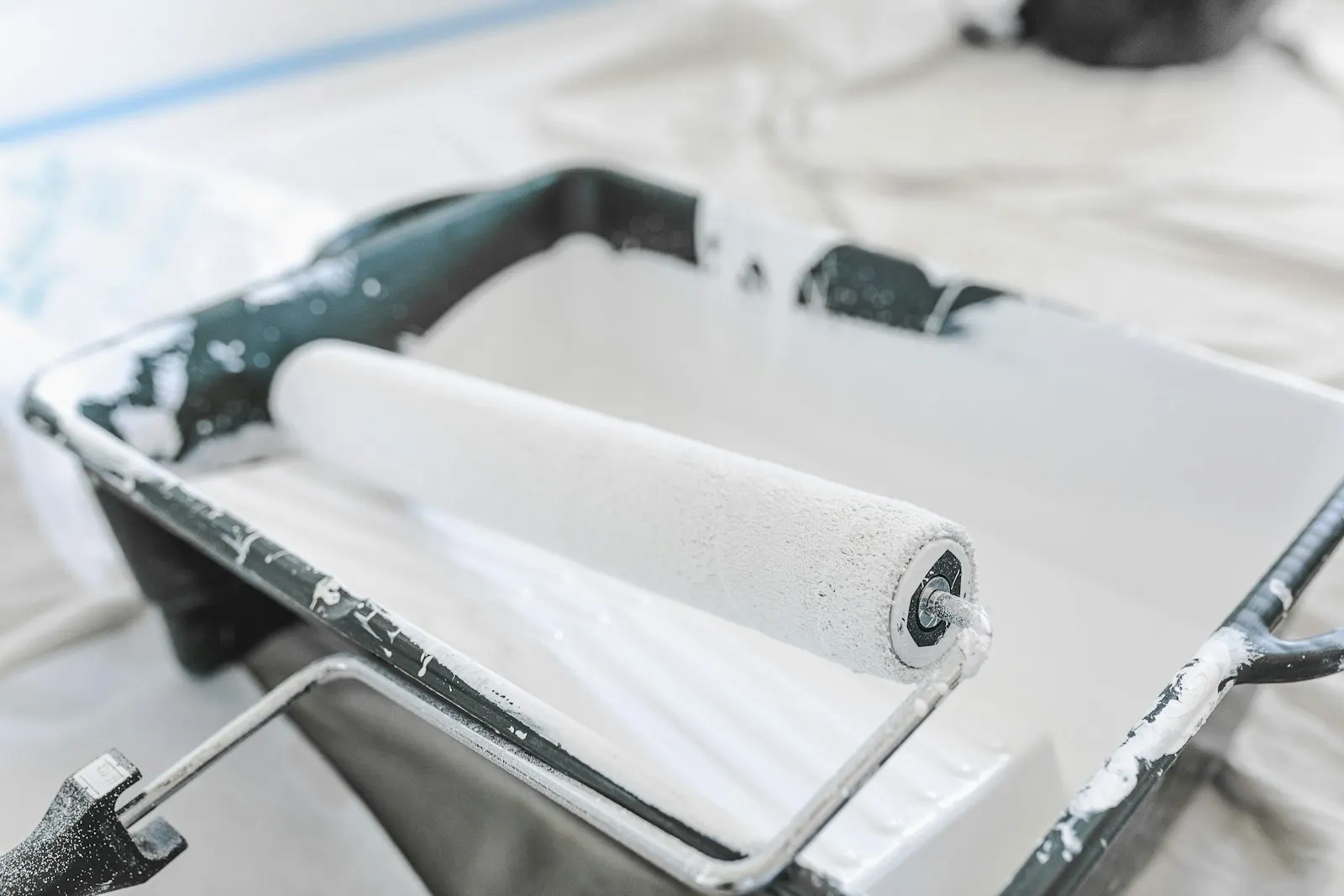
Doors and trims take the most wear in a home. They are usually painted in a semi-gloss or gloss enamel, which is durable but shows brush marks and repairs. We lightly sand, fill dings and repaint so they look fresh and even. Water-based enamels are commonly used now because they dry faster and yellow less than oil-based paints.
Stains and marks
Some marks bleed through new paint if they are not sealed first, such as water stains on ceilings, crayon, marker, smoke marks and some grease stains. We use a stain-blocking primer before painting to stop them coming back. If a water stain is new, the source of the leak must be fixed first.
Rental properties
At the end of a lease, touch-ups help return walls to a reasonable condition after allowing for fair wear and tear. We patch fixing holes, touch up marks and repaint walls where needed. For landlords, freshening paint between tenancies improves how a property presents to new tenants. See end of lease and rental repairs and our page for property managers.
Exterior painting
We paint small exterior areas such as a garden wall, a fence section, a gate, a front door or exposed timber. Full exterior repaints of homes are best handled by a dedicated painting company, particularly for double-storey homes.
Odour and drying
Most modern interior paints are water-based and low in odour. Rooms can usually be used the same day, though full curing takes longer. We ventilate while we work and leave the room tidy.
Understanding paint sheen
Sheen describes how shiny a paint finish is. It affects how the surface looks, how easy it is to clean and how well touch-ups blend.
- Flat or matt finishes hide surface imperfections and suit ceilings and formal rooms. They are harder to clean, though washable matt products have improved.
- Low sheen is the most common wall finish in Australian homes. It has a soft glow, cleans reasonably well and touches up fairly well.
- Satin or semi-gloss finishes are used on doors, trims and wet areas. They are durable and wipeable but show brush marks and patch outlines.
- Gloss is the shiniest and toughest, used on trims and doors in some homes. It highlights every flaw and is the hardest finish to touch up.
If a touch-up is done with the wrong sheen, it shows even when the colour is right. A low sheen patch on a matt wall will glint in certain light. Matching both colour and sheen is essential.
Why the same paint can look different
Even with the exact same tin, a touch-up can look different because:
- The original wall has faded or yellowed from sunlight and age
- The original was applied with a roller and the touch-up with a brush, giving a different texture
- The patch was not primed, so the new paint soaked in differently
- The wall was dirty or greasy around the touch-up area
- The touch-up was applied too thickly
We reduce these effects by priming, using the same application method, feathering edges and, where necessary, painting the wall corner to corner.
Feature walls and colour changes
A feature wall can lift a living room, bedroom or entry without the commitment of painting the whole room. Darker colours need more coats and careful cutting in at the ceiling and adjoining walls. Going from a dark colour back to a light one often takes a primer coat as well. If you are undecided on colour, sample pots painted on large pieces of card and moved around the room at different times of day help make the choice.
Ceilings
Ceilings get stained by leaks, marked by smoke and grease in kitchens, and patched after electrical work. Touching up ceilings is difficult because flat ceiling paint shows differences in light from windows. For small ceiling repairs, we usually paint the whole ceiling in the room, or at least from one edge to another, so the finish is even. Water stains always need a stain-blocking primer first.
Bathrooms and laundries
Wet areas need paints formulated to resist moisture and mould. Standard wall paint in a poorly ventilated bathroom can peel and grow mould. When repainting a bathroom, we clean off mould with a suitable treatment, let the surface dry, prime if needed and use a bathroom-rated paint. Improving ventilation, such as using the exhaust fan longer after showers, helps the finish last.
Exterior touch-ups
Front doors, gates, timber posts and garden walls weather quickly in direct sun and rain. A fresh coat on a front door or gate makes a strong impression for sale or simply for pride in the home. Exterior paint needs dry weather and moderate temperatures. Painting in full afternoon sun in summer can cause the paint to dry too fast and blister.

Preparing a home for sale
Real estate agents often suggest a few painting jobs before photos and inspections. Common ones include touching up hallway scuffs, repainting a bold feature wall in a neutral tone, freshening doors and trims, and painting the front door. These are usually quick jobs that make a property look well cared for. See also pressure washing and general home repairs.
Lead paint in older homes
Homes built before 1970 may have layers of lead-based paint, particularly on timber doors, windows and trims. Sanding lead paint creates hazardous dust. If we suspect lead paint in an older home, we may recommend testing before sanding. Test kits are available, and there are safe methods for dealing with it. Most homes in the newer estates around Cranbourne will not have this issue, but some older homes in central Cranbourne, Lang Lang and Koo Wee Rup may.
Leftover paint
Store leftover paint with the lid sealed tightly, in a cool, dry place out of direct sun. Label the tin with the room and date. Old water-based paint that has separated, smells sour or has gone lumpy should not be used. Unwanted paint can be dropped off at Paintback collection points rather than put in household rubbish.
Tools and finish quality
We use quality rollers with the right nap for the surface, angled sash brushes for cutting in and fine fillers for small dents. Cheap rollers leave lint and uneven texture; worn brushes leave streaks. The right tools make the difference between a touch-up that disappears and one that stands out.
Where we work
We do painting touch-ups across Cranbourne, Cranbourne North, Cranbourne East, Cranbourne West, Clyde North and our other service areas. Send photos and any paint details through the quote form.
Frequently asked questions
Will touch-ups match my existing paint?
They match best when the colour and product are known and the paint has not faded. Otherwise, painting the full wall gives a better result.
Do you supply the paint?
We can, or we can use your leftover paint if it is in good condition.
Can you paint a whole room?
Yes, for small rooms. Large repaints are best handled by a painting company.
Why do stains come back through new paint?
Some stains bleed through unless sealed with a stain-blocking primer first.
How soon can I use the room?
Usually the same day with water-based paints, though full curing takes longer.
Why does my touch-up look shinier than the wall?
The sheen does not match, or the paint was applied differently. Matching sheen and method, or painting corner to corner, fixes this.
Can you paint bathrooms?
Yes, using moisture- and mould-resistant paint after treating any mould.
Do you paint feature walls?
Yes. Darker colours need extra coats and careful cutting in, and we can help you test colours first.
Can you match paint without the original tin?
Usually. A paint store can colour-match from a small chip, though faded walls may still need painting corner to corner.
Get a free quote
Send us your list of jobs, your suburb and a few photos. We will reply with a clear written scope and a free, no-obligation quote.
Get a free quote