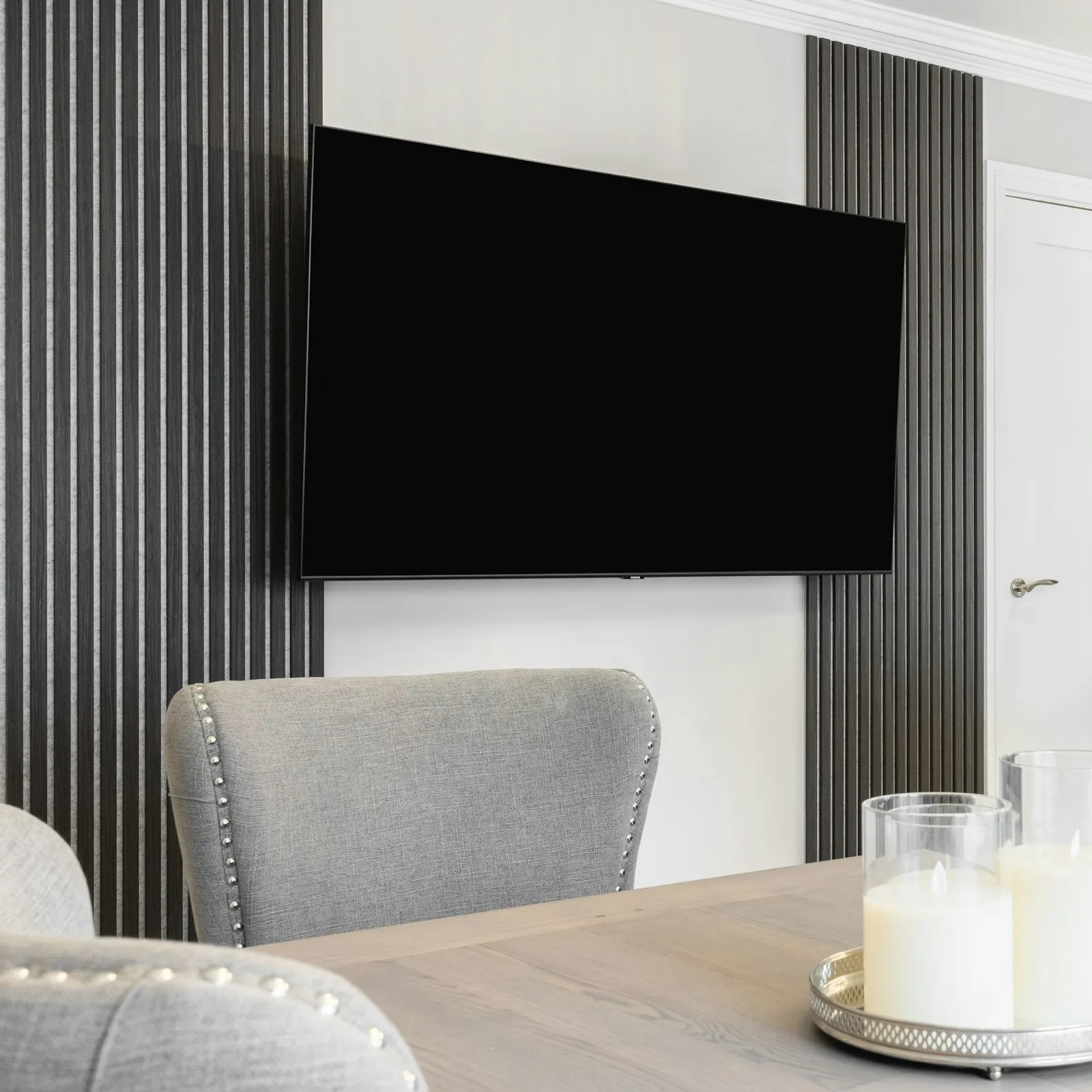
A wall-mounted TV frees up floor space, keeps screens out of reach of small children and makes a living room look tidier. It also puts a heavy, expensive piece of electronics on a wall, which means the mounting has to be done properly. A bracket fixed into plasterboard with the wrong anchors may hold for a while, then slowly pull out, and a falling TV can cause serious damage or injury.
We mount TVs across Cranbourne and the surrounding suburbs, onto plasterboard over timber or steel studs, brick, block and other wall types. We set them at a comfortable height, level them carefully and make sure the bracket is fixed to something solid.
What we mount
- Flat-panel TVs of most sizes on fixed, tilting and full-motion brackets
- Soundbars and small speakers below or above the screen
- Floating shelves for set-top boxes, game consoles and streaming devices
- Monitors in home offices and study nooks
- Screens in shops, waiting rooms, offices and gyms
- Outdoor TVs in covered alfresco areas, on suitable brackets
Choosing a bracket
There are three main types of TV bracket, and the right one depends on how you use the room.
Fixed brackets
A fixed bracket holds the TV flat against the wall, usually with a gap of a few centimetres. It is the slimmest and most stable option and works well when the TV is at a comfortable viewing height directly in front of the main seating.
Tilting brackets
A tilting bracket lets you angle the screen down slightly. This helps when the TV has to go higher than ideal, for example above a fireplace or a low cabinet, and reduces glare from windows or lights.
Full-motion brackets
A full-motion or articulating bracket lets the TV swing out, turn and tilt. It is handy in open-plan rooms where you want to watch from the kitchen as well as the couch, or in corners. Full-motion brackets put more leverage on the wall fixings, especially when extended, so solid fixing is even more important.
Whichever bracket you choose, check it is rated for your TV’s weight and fits the VESA mounting pattern on the back of the TV. The pattern is usually listed in the TV manual or on the manufacturer’s website, written as two numbers such as 300 x 300 or 400 x 400.
Mounting on different walls
Plasterboard on timber studs
Most internal walls in Cranbourne homes are plasterboard over timber or steel frames. The safest approach is to fix the bracket directly into the studs with heavy-gauge screws. We locate the studs with a stud finder and confirm with small test holes hidden behind the bracket. If the studs do not line up with where you want the TV, there are options, such as a bracket with a wide wall plate or adding timber noggings behind the plasterboard.
Plasterboard on steel studs
Some newer homes and many apartments and townhouses use light-gauge steel framing. Steel studs need different fixings, and we choose fasteners suited to the stud thickness and the TV weight.
Brick and block
Brick and block walls are strong but need the right anchors. We use masonry anchors suited to the wall material, and drill into solid brick rather than mortar joints wherever possible.
Walls we will not mount on
Some walls are not suitable for a heavy TV, such as thin partition walls with no studs where they are needed, or walls with known damage. If your preferred spot will not safely hold the TV, we will tell you and suggest an alternative.
Getting the height right
The most common mistake with wall-mounted TVs is mounting them too high. A screen that looks fine standing up can be uncomfortable from a couch. As a rule of thumb, the centre of the screen should be roughly at eye level when you are seated, which is often lower than people expect. We can hold a template or use painter’s tape to mark the outline on the wall so you can check the position from your seat before we drill.
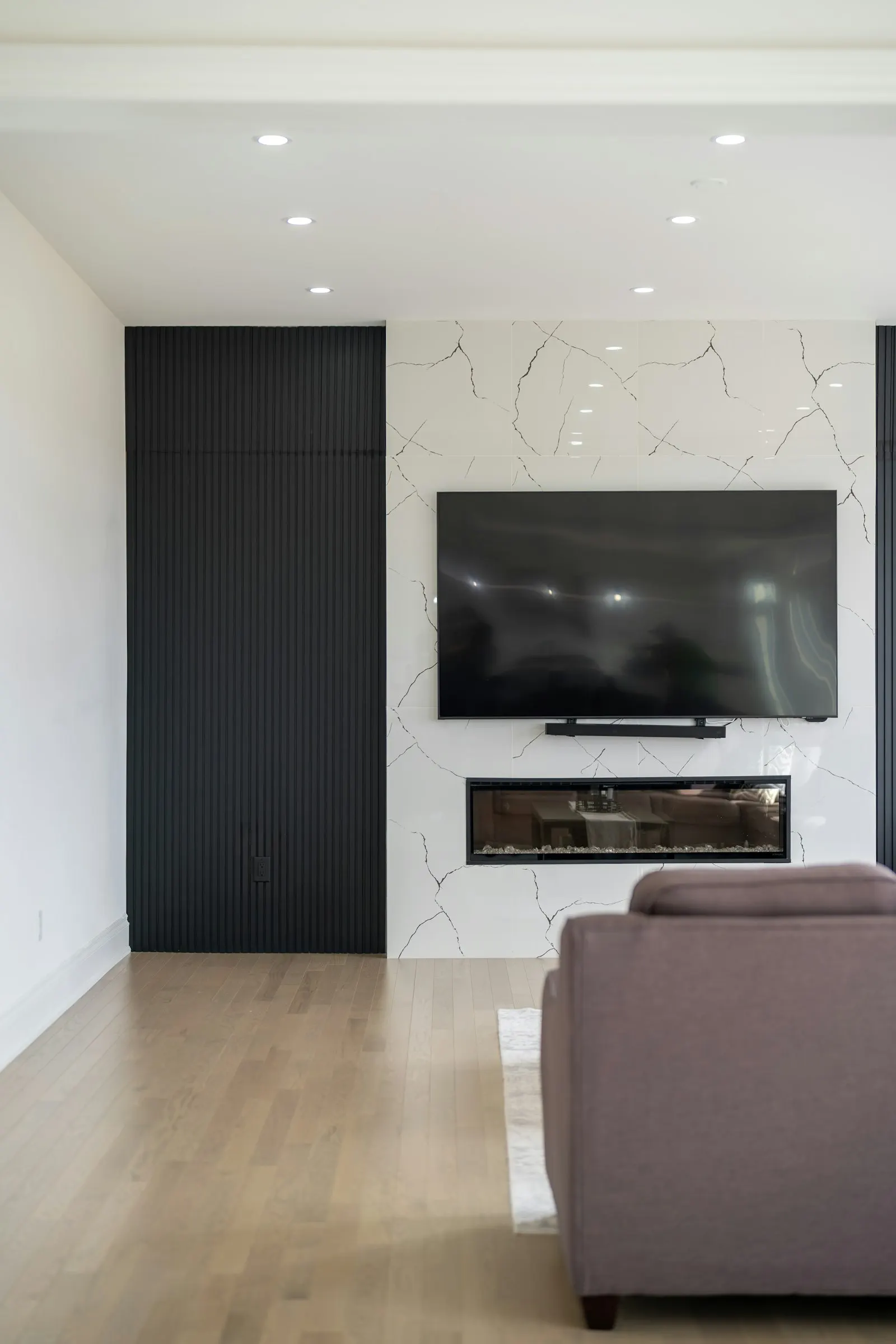
Above-fireplace mounting is popular but tends to put the screen high and close to heat. If you want the TV above a fireplace or heater, a tilting bracket helps, and you should check the manufacturer’s guidance on heat clearance.
Cables and power
Hanging cables spoil the look of a mounted TV. There are a few ways to tidy them:
- Surface-mounted cable covers painted to match the wall
- In-wall cable kits designed for low-voltage cables such as HDMI and antenna leads
- Positioning the TV over an existing power point so the cord is hidden
Moving or adding a power point behind the TV is electrical work and must be done by a licensed electrician in Victoria. We can mount the TV and run low-voltage cables, and work alongside your electrician if you want a power point moved. Antenna and satellite work is a specialist trade too.
Soundbars and accessories
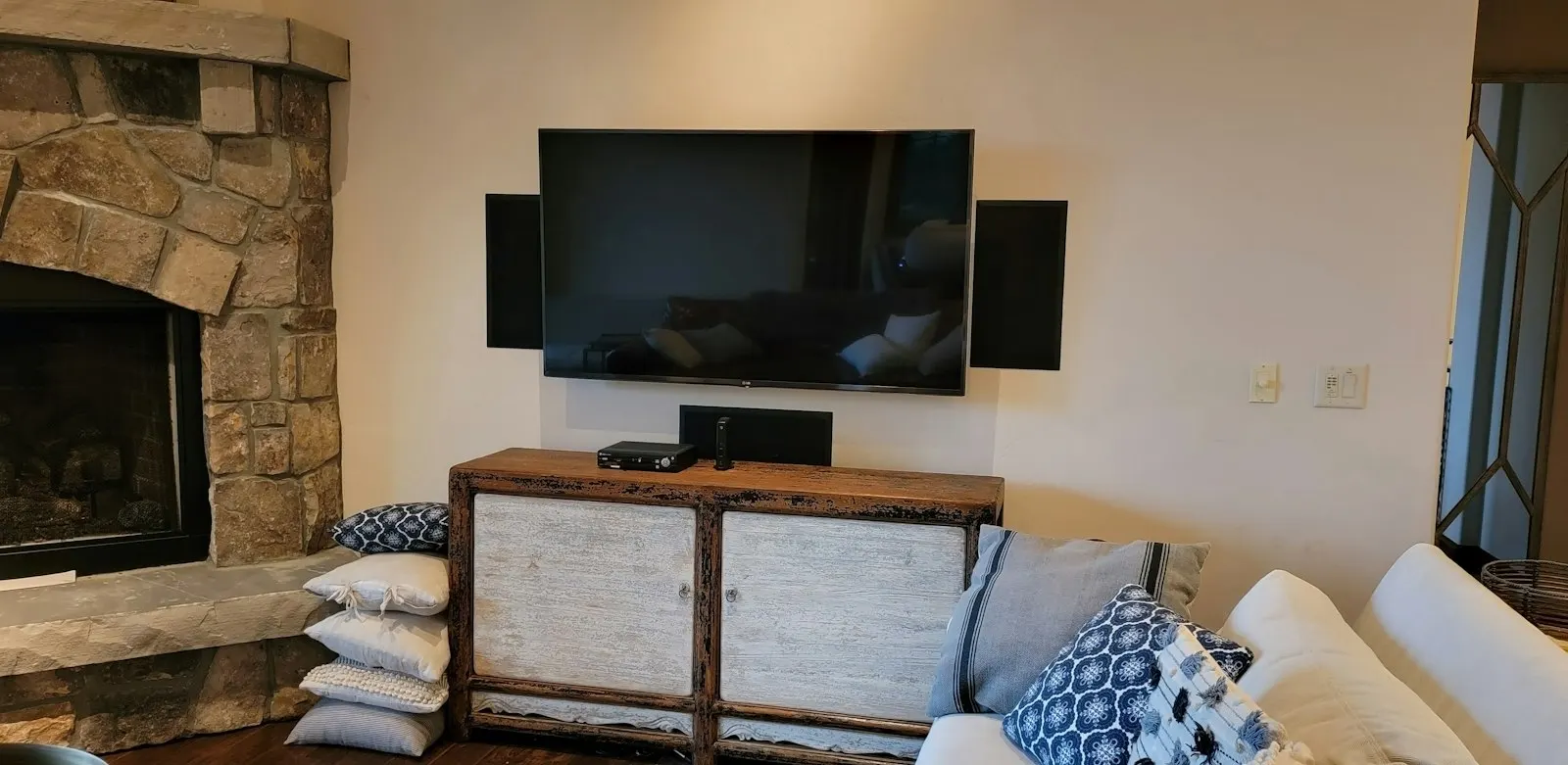
Soundbars can be mounted below the TV on their own bracket, or attached to some TV brackets with an adaptor. Floating shelves for set-top boxes and gaming consoles sit nicely below a mounted TV and keep remotes and devices off the floor. We fit these at the same time as the TV so everything lines up.
Commercial and multiple screens
Shops, cafes, clinics and offices around Cranbourne and the Clyde North town centres often use wall-mounted screens for menus, information or meeting rooms. We mount commercial screens on suitable brackets and can work outside business hours where it suits. See our commercial handyman services.
Safety with children
Unsecured TVs on cabinets are a recognised tip-over risk for young children. Mounting the TV, or anchoring furniture that holds a TV, is a sensible safety step. We also secure tall furniture such as bookcases and chest of drawers to walls. Our flat-pack assembly page explains furniture anchoring.
Moving a TV
If you are moving house or redecorating, we can take down an existing TV and bracket, patch the holes and remount it elsewhere. Our plaster patching service covers the repair of old bracket holes.
Before we arrive
To help the visit run smoothly:
- Have the TV and bracket on site, or tell us if you want us to supply a bracket.
- Note the TV brand, model and screen size in your quote request.
- Decide roughly where you want the TV and at what height.
- Clear furniture from in front of the wall if you can.
Send your details through the quote form. We mount TVs in Cranbourne, Clyde North, Cranbourne East, Cranbourne West, Botanic Ridge and the rest of our service areas.
Choosing the right height
The most common mistake with wall-mounted TVs is hanging them too high. Above-fireplace mounting and “centred on the wall” placements often put the screen well above eye level, which leads to neck strain over long viewing sessions. A good starting point is to place the centre of the screen at roughly seated eye level from your usual viewing position. In most living rooms with a standard couch, that ends up lower than people expect.
For bedrooms, where you might watch from a bed, the screen can sit higher and tilt down slightly. For kitchens and alfresco areas where people stand, a higher position works. In kids’ rooms and rumpus rooms, think about who is watching and from where.
Before we drill, we hold a template or the TV itself in place so you can sit down and check the height. Moving a TV later means patching holes, so it pays to spend a few minutes getting this right.
Viewing distance and angles
Screen size and viewing distance go together. A large screen in a small room can feel overwhelming, while a small screen at the end of a long open-plan room is hard to see. Light also matters: a screen opposite a big west-facing window, which is common in Cranbourne homes oriented to the street, will suffer from glare in the afternoon. A tilting or full-motion bracket helps, as does choosing a wall at right angles to the window.
Cable management options
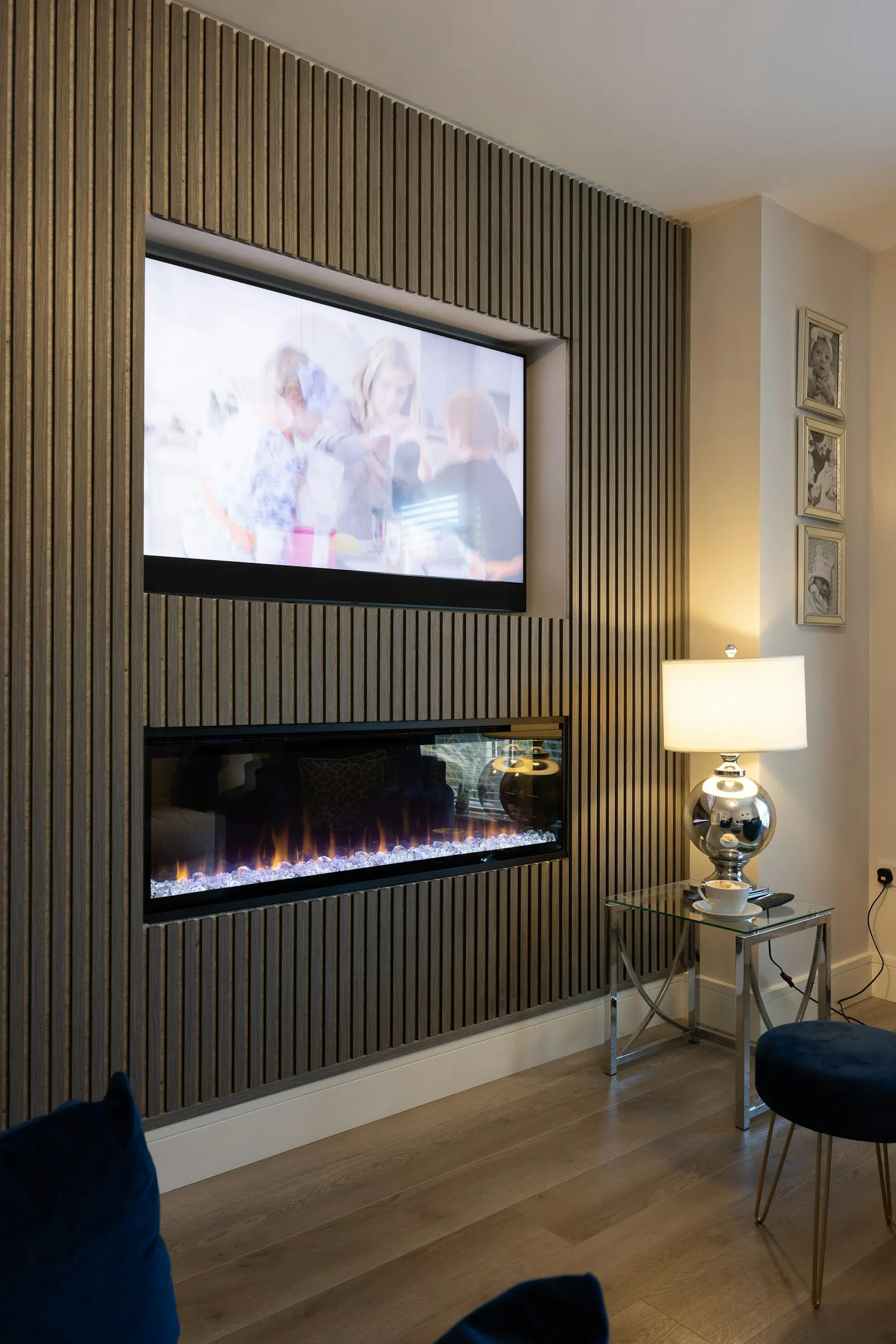
Loose cables hanging below a wall-mounted TV spoil the clean look. Options include:
- Surface cable covers that run from the TV down to the cabinet. These are quick, tidy and suit brick and masonry walls where in-wall routing is not practical.
- In-wall cable routing through plasterboard cavities using a recessed wall plate behind the TV and another near the cabinet. This needs a clear cavity without noggings, insulation blockages or fire separation in the way.
- Recessed power outlet behind the TV. This avoids running a power cord down the wall but must be installed by a licensed electrician.
Running mains power cables inside walls is not permitted except by a licensed electrician. Low-voltage cables such as HDMI and antenna leads can be routed through wall cavities using appropriate plates and grommets.
Brick, block and double-brick walls
Some homes in older parts of Cranbourne and the townships have brick internal walls. These provide very strong fixing but make hidden cables difficult. We drill into the brick face with masonry bits and use anchors rated for the bracket. Cables usually run in a slim surface channel that can be painted to match the wall.
Steel stud walls
A few newer builds and many commercial fit-outs use steel studs rather than timber. Standard wood screws do not hold in steel. We use fixings designed for steel framing or toggle anchors rated for the load, and we check the stud gauge before committing to a heavy mount.
Soundbars, consoles and accessories
Many people want a soundbar mounted under the TV, a streaming box hidden behind it or a console shelf nearby. We can mount soundbars with matching brackets, fix small floating shelves for devices and tidy everything into a neat arrangement. Wireless devices behind a TV sometimes lose signal, so placing the router or a range extender nearby helps.
Removing old mounts
Moving a TV or selling a home often means removing an old bracket. We unscrew the bracket, remove anchors where possible, patch the holes and touch up the paint. See plaster and wall patching. In rentals, removing the bracket and patching neatly is usually expected at the end of a lease.
Frequently asked questions
Can you mount a TV on plasterboard?
Yes, by fixing the bracket into the timber or steel studs behind the plasterboard, or adding timber noggings where needed. We do not rely on plasterboard anchors alone for a TV.
Do you supply the bracket?
We can, or you can supply one. Either way it must be rated for your TV’s weight and match its VESA pattern.
Can you hide the cables in the wall?
We can run low-voltage cables such as HDMI through in-wall kits or use paintable cable covers. Moving power points needs a licensed electrician.
How high should my TV be?
Usually with the centre of the screen near seated eye level. We can mark the outline on the wall so you can check before we drill.
Can you mount a TV above a fireplace?
Often, but check heat clearances in the TV manual. A tilting bracket helps with the higher viewing angle.
How high should my TV be?
Usually with the centre of the screen near seated eye level. We test the height with you before drilling.
Can you hide the cables in the wall?
Low-voltage cables can often be routed in plasterboard cavities. New power outlets behind the TV need a licensed electrician.
Get a free quote
Send us your list of jobs, your suburb and a few photos. We will reply with a clear written scope and a free, no-obligation quote.
Get a free quote