
Many jobs around a home come down to timber: a rotten window sill, a missing length of architrave, a wobbly step, a shelf in the laundry, a frame for a cupboard. These are too small for a building company and too fiddly for most people to tackle themselves. Small carpentry is the core of what a good handyman does.
We do small carpentry jobs for homes, rentals and small businesses across Cranbourne and the surrounding suburbs and semi-rural areas, from new homes in Clyde North to older weatherboards in Cranbourne and farmhouses around Koo Wee Rup.
Carpentry jobs we do
- Repairing or replacing rotten timber on window sills, frames and fascias
- Fitting new skirting boards, architraves and trims
- Building simple shelving in laundries, garages, pantries and wardrobes
- Fitting or repairing timber steps and landings
- Repairing timber weatherboards and cladding
- Building small timber frames for cupboards, boxes and enclosures
- Fitting door jambs, stops and frames
- Replacing damaged timber on verandahs and porches
- Making small timber items such as planter boxes and step stools
- Repairing or building simple timber gates
- Trimming doors to clear new flooring
Hand and machine skills
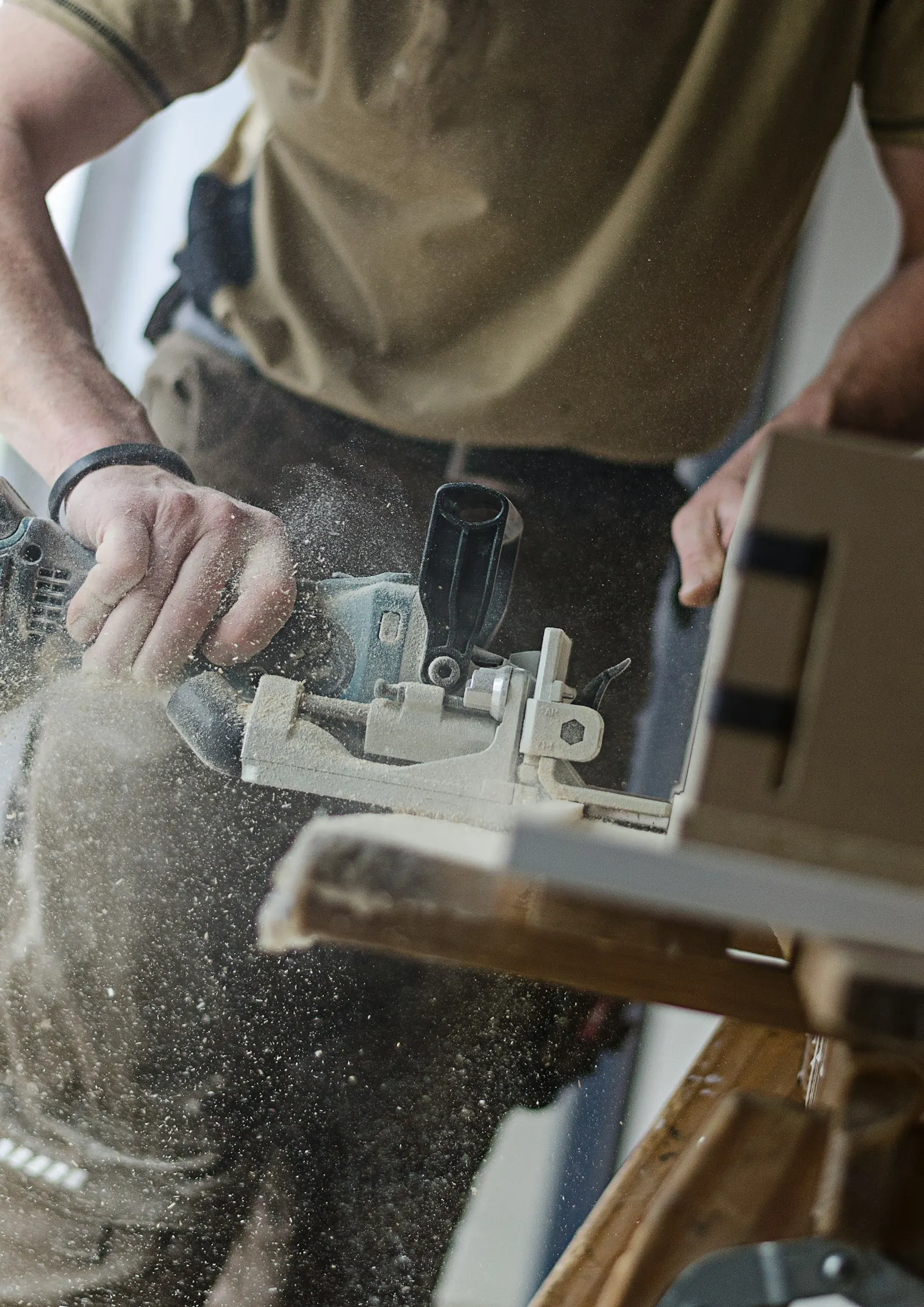
Good carpentry is about measuring carefully, cutting accurately and fixing securely. We bring a mitre saw, circular saw, drills, planers and hand tools to site and set up a small work area so cutting is done safely and cleanly. Mitres on trims are cut and adjusted to close tightly, and joints are glued and fixed so they stay closed.
Rotten timber
Timber outdoors, especially at the base of door frames, window sills and verandah posts, rots when it stays wet. Cranbourne’s wet winters and clay soils mean water often sits around the base of structures. Signs of rot include:
- Soft or spongy timber when pressed
- Flaking or bubbling paint
- Dark staining or mould
- Timber crumbling at edges
Small rotten sections can sometimes be cut out and replaced with new timber spliced in. Larger areas need a full replacement. We also look at why the timber rotted and suggest ways to stop it happening again, such as better drainage, flashing or a protective finish.
Shelving and storage
Practical storage makes a home easier to live in. We build and fit:
- Laundry shelving above machines
- Garage shelving for storage boxes and tools
- Pantry shelving to make use of deep spaces
- Wardrobe shelves and hanging rails
- Linen cupboard shelves
Shelves are fixed into framing with supports suited to the load. For long spans, we use thicker timber or extra supports so shelves do not sag.
Trims and finishes
Skirting boards, architraves and other trims finish a room. When trims are damaged, missing or changed during renovations, we fit new ones to match the existing profile as closely as possible. Common profiles such as bullnose and splayed are easy to match. Older or decorative profiles may need a close substitute or custom work. See floor and skirting repairs.
Weatherboards and cladding
Older homes in central Cranbourne and the townships of Lang Lang and Koo Wee Rup often have timber weatherboards. Individual boards can split, rot or come loose. We replace damaged boards, match profiles where possible, and prime and paint the new timber. Large areas of damaged cladding may need a builder.
What we do not do
We do not do structural work that needs a building permit, such as removing load-bearing walls, building extensions or large decks. We will tell you if a job needs a registered building practitioner.
Materials
We use timber suited to the job: treated pine outdoors and in damp areas, primed MDF or pine for internal trims, and hardwood where strength or appearance matters. Fixings are galvanised or stainless outdoors.
Carpentry in new homes
New homes in Clyde North, Cranbourne East, Cranbourne West and Botanic Ridge are usually built quickly by volume builders, and owners often want to add the finishing touches the builder left out. Common requests include:
- Shelving and hanging rails in walk-in robes, which are often delivered with a single shelf and rail
- Linen cupboard shelves
- Garage shelving and workbenches
- Under-stair storage in double-storey homes
- Window seats and simple built-in benches
- Timber screening to hide bins or air conditioning units
- Box frames around exposed pipes
These additions make a home work better and usually take a day or less.
Carpentry in older homes
Established homes around central Cranbourne and the older townships have different needs. Timber windows, weatherboards, verandahs, timber floors and older doors all need regular care. Typical jobs include:
- Replacing rotten weatherboards near the ground
- Rebuilding verandah steps and repairing verandah boards
- Fitting new door jambs after termite or water damage (once the cause is dealt with)
- Repairing double-hung window sashes
- Matching old-style architraves and skirting
- Building storage in awkward spaces
Older homes often have walls and floors that are not quite square or level, so trims and shelves have to be scribed and adjusted to fit. That takes patience and is where carpentry skill shows.
Termite damage
Termites are present across much of Melbourne’s south-east. If timber crumbles, sounds hollow or has mud tunnels, termites may be active. Do not disturb them; contact a licensed pest controller first. Once the termites are treated and the cause is addressed, we can replace damaged non-structural timber such as skirting, architraves and door jambs. Structural damage needs a registered builder.
Outdoor timber projects
Small outdoor projects suit a handyman well:
- Planter boxes and raised vegetable garden beds
- Timber edging and simple garden steps
- Bin enclosures and screening
- Simple timber benches
- Repairs to cubby houses and play equipment
- Timber gates and small sections of fencing
For raised garden beds, we use timber suited to soil contact. Some treated timber types are not recommended for growing edible plants; we can talk through options such as lining beds or using untreated hardwood.

Precision and finishing
Neat carpentry depends on details: tight mitres, nails punched below the surface and filled, edges sanded smooth, and gaps sealed before painting. We finish internal trims ready for paint, or prime and paint them ourselves where that is part of the job. See painting touch-ups.
Working safely
Carpentry involves sharp tools and power saws. We set up a safe cutting area outside or in the garage where possible, use dust extraction, and keep children and pets away from the work zone. Offcuts and sawdust are cleaned up at the end of the visit.
Materials and supply
We can supply timber and fixings or work with materials you have bought. If you are buying timber yourself, check the size, grade and treatment level, and choose straight pieces without large knots or splits. Timber for outdoor use should be rated for its exposure: above ground, ground contact or in-ground. Primed finger-jointed pine is common for internal trims because it is stable and ready to paint.
Small jobs welcome
Many people hesitate to call about a small carpentry job, such as a single length of skirting, one rotten sill or one shelf. Small jobs are what we do. Combining several into a single visit makes the best use of time. See general home repairs.
Measuring for a quote
To help us plan, measure the length and height of shelving spaces, the width of window sills, or the size of the timber you want replaced. Photos with a tape measure in frame are very useful. For built-in shelving, note what will be stored, as heavy items need stronger shelves and closer supports.
Doors and frames
Much day-to-day carpentry involves doors. When new flooring is laid, doors may need trimming at the bottom. When a house moves, door frames can drop out of square and jambs need packing. When a door is replaced, the new slab must be hung on the old frame with hinges routed to match. Our door repairs and installation page covers this in more detail.
Sheds and outbuildings
On semi-rural properties around Devon Meadows, Cranbourne South, Clyde, Lang Lang and Koo Wee Rup, timber sheds, stables, chook houses and outbuildings need ongoing repair. Common tasks include replacing rotten wall boards, fixing doors that drag, adding shelving and workbenches, and building simple partitions. Older outbuildings may contain asbestos sheeting, so we check before cutting or drilling into fibrous cement sheets.
Timber versus alternatives
For some jobs, materials other than timber may be better. Fibre cement trims resist rot in wet areas. Aluminium angle protects corners. Composite boards suit steps that get constant moisture. We suggest alternatives where they will last longer, but we always explain the trade-offs.
Getting the order right
Carpentry often sits in the middle of a sequence. Rotten timber is replaced, then primed, then painted. Shelves go in after walls are painted. Skirting goes on after flooring. Planning the order saves repeating work.
Cubby houses and play equipment
Timber cubby houses, sandpits and swing frames weather quickly. Splinters, loose boards and rusted bolts are common. We replace damaged boards, tighten or replace bolts, sand rough edges and re-oil or paint so play equipment is safe for another few seasons.
Where we work
We take on carpentry jobs in Cranbourne, Cranbourne South, Clyde North, Botanic Ridge, Lang Lang, Koo Wee Rup and our other service areas. Send photos and measurements through the quote form.
Frequently asked questions
Can you replace a rotten window sill?
Yes, depending on the extent of rot. Small sections can be spliced; larger areas need full replacement.
Do you build shelving?
Yes. We build and fit shelving for laundries, garages, pantries and wardrobes.
Can you match old skirting?
Common profiles are easy to match. Older or decorative profiles may need a close substitute.
Do you do structural carpentry?
No. Structural work needing a permit should be done by a registered building practitioner.
Can you trim doors for new flooring?
Yes. We remove, trim and rehang doors to clear new floors.
Can you add shelves to my walk-in robe?
Yes. We design and fit shelving and hanging rails to suit your storage needs.
Can you fix termite-damaged timber?
Once a licensed pest controller has treated the problem, we can replace non-structural timber. Structural damage needs a builder.
Can you repair a shed or outbuilding?
Yes. We replace damaged boards, fix doors and add shelving, checking older sheeting for asbestos before cutting.
Can you repair a timber cubby house?
Yes. We replace damaged boards, tighten fixings, sand rough edges and refinish the timber.
Can you supply the timber?
Yes, or we can work with timber you have bought, as long as it suits the job.
Get a free quote
Send us your list of jobs, your suburb and a few photos. We will reply with a clear written scope and a free, no-obligation quote.
Get a free quote